

Published: September 20, 2020 · Updated: September 27, 2026
Quick answer: About five or six guppies suit a 10-gallon tank. The old “1 inch of fish per gallon” rule points to roughly six or seven, but it’s only a rough guide — guppies breed fast and produce a lot of waste, so a comfortable number is around five or six. Keep two to three females per male to spread out breeding harassment, or an all-male group for colour with no fry, and give them good filtration and a weekly water change.
A 10-gallon tank is a great beginner size, and guppies are hardy, colourful, and easy-going — a perfect first fish. The natural first question is how many of them will actually fit. Below is a straight answer, plus how size, gender, and their famously fast breeding change the number, and how to set the tank up.
Watch: how many guppies really fit in a 10-gallon tank.
How Many Guppies in a 10-Gallon Tank?
A practical, comfortable answer is about five or six guppies in a 10-gallon tank. The well-known “one inch of fish per gallon” rule suggests a bit more — an adult guppy is roughly 1–1.5 inches, so the rule points to around six or seven — but treat that rule as a rough starting point, not a hard limit. It ignores waste output, swimming room, and the space taken up by substrate, plants, and décor, and guppies are messy, prolific fish. Some care guides are even more conservative, allowing only a couple of gallons per fish. Five or six well-kept guppies with good filtration is the sensible middle ground.
Does Size and Gender Change the Number?
Yes. Male guppies are smaller and slimmer (about 0.6–1.4 inches) while females are noticeably larger and bulkier (about 1.2–2.4 inches). Because of that, an all-female tank holds slightly fewer fish than an all-male one. Gender also decides whether you get babies, which is the single biggest factor in how a guppy tank fills up.
| Setup | Rough number in a 10-gallon | Notes |
|---|---|---|
| All male | About 5–6 | Full colour, no fry to manage |
| All female | About 4–5 | Females are larger, so slightly fewer; calmer tank |
| Mixed (1 male : 2–3 females) | About 5–6 total | Expect fry — plan for it (see below) |
What Male-to-Female Ratio Should You Keep?
If you keep both sexes, aim for two to three females for every male — not the other way around. Male guppies court females constantly, so having several females spreads that attention out; a single female with several males gets relentlessly harassed and stressed. Both PetMD and Aquarium Co-Op recommend roughly one male to two or three females.
If you would rather avoid fry entirely, keep an all-male group. Males carry the bright colours and long fins guppies are loved for, and with no females there is no breeding to manage.
What Happens When Guppies Breed?
Guppies are livebearers that breed very readily — a female can give birth roughly every month, and can even store sperm to keep producing broods. In a 10-gallon tank, that means a mixed-sex group will quickly outgrow the space. Plan ahead with one of these:
- Keep all-male so there is no breeding in the first place.
- Provide dense cover — floating plants and bushy plants like guppy grass give fry places to hide, but in a small tank they also mean the population climbs fast.
- Have a plan for the fry — a separate grow-out tank, or rehoming them by selling or giving them to local fishkeepers and shops. Guppies are popular, so extras are usually easy to pass on.
Setting Up a 10-Gallon Guppy Tank
Guppies are undemanding, but a stable setup keeps them healthy:
- Temperature: around 72–82°F, with about 76–78°F a good middle. Keep it stable — avoid swings of more than a couple of degrees in a day.
- Water: guppies like neutral to slightly alkaline, harder water (pH around 7.0 or a little above). Always condition tap water for chlorine and chloramine first, following your dechlorinator’s label for the correct dose.
- Substrate and décor: sand or smooth gravel both work; a couple of inches is plenty. Plants, rocks, or a cave give guppies cover and make the tank look good, but substrate choice matters far less than clean, stable water.
Filtration for a Guppy Tank
Because guppies are messy and breed fast, filtration is essential — it keeps the water safe and cuts down on manual maintenance. A good filter combines up to three roles:
- Biological filtration is the most important. Beneficial bacteria in the filter convert toxic ammonia (from waste and uneaten food) into nitrite and then into far less harmful nitrate, which you then keep low with weekly water changes and plants. A sponge filter or a hang-on-back filter houses these bacteria well.
- Mechanical filtration physically traps debris and waste — a sponge or filter floss does this and is easy to rinse out.
- Chemical filtration, such as activated carbon, removes odours, discolouration, and some dissolved organics. It is a useful optional extra, not an essential.
Best Plants for a Guppy Tank
Live plants aren’t just decorative — they give fry cover, provide surfaces for beneficial bacteria, and help absorb some waste. Easy, guppy-friendly choices include:
- Java fern
- Guppy grass
- Hornwort
- Water wisteria
- Amazon sword
- Floating plants such as Amazon frogbit or duckweed (great fry cover, but keep them thinned so they don’t blanket the surface)
Lighting is optional for the fish themselves — guppies don’t need bright light — but you’ll want enough to keep live plants healthy. LED lights are ideal because they don’t heat the water.
Frequently Asked Questions
How many guppies can I keep in a 10-gallon tank?
About five or six is a comfortable number. The “inch per gallon” rule suggests six or seven, but that’s a rough guide — guppies are messy and breed fast, so err on the lower side with good filtration.
What is the best male-to-female guppy ratio?
About two to three females per male. More females spread out the males’ constant courting; a lone female with several males gets harassed. To avoid fry altogether, keep an all-male group.
Can I keep only male guppies together?
Yes — an all-male group works well, shows off the brightest colours and fins, and produces no fry to manage. You can keep roughly five or six males in a 10-gallon tank.
How fast do guppies breed?
Very fast. A female can give birth about every 30 days and can store sperm for future broods, so a mixed-sex group will outgrow a 10-gallon tank quickly unless you plan for the fry.
What temperature do guppies need?
Around 72–82°F, with about 76–78°F ideal. The key is stability — avoid temperature swings of more than a couple of degrees within a day.
Because guppies need steady warmth, they are not an ideal match for cool-water goldfish — see our guide on keeping guppies with goldfish.
Do guppies need a filter and live plants?
A filter is essential — guppies produce a lot of waste. Live plants aren’t strictly required but are very helpful for water quality and for giving fry places to hide.
Sources & References
- PetMD — Guppy Fish Care Sheet: temperature, the two-to-three-females-per-male ratio, tank size, and prolific breeding.
- Aquarium Co-Op — Guppy Care Guide: breeding ratio, temperature effects, water chemistry, and tank-size guidance.
Related guide: why aquarium shrimp are so expensive.
The Bottom Line
Aim for about five or six guppies in a 10-gallon tank rather than cramming in the maximum the old inch-per-gallon rule allows. If you mix sexes, keep two to three females per male — and be ready for a steady stream of fry — or keep an all-male group for pure colour with no breeding. Give them stable, warm water, a good filter, a weekly water change, and a few live plants, and guppies are about as rewarding as a beginner tank gets.





[…] Related guide: how many guppies fit in a 10-gallon tank. […]
[…] Related guides: Why did my fish turn black and die? and How many guppies in a 10-gallon tank? […]
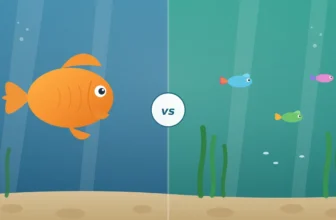
[…] Beyond temperature and predation, the two fish are built for different tanks. Goldfish need space and strong filtration to cope with their waste and their eventual size. Guppies do well in smaller, warm, gently filtered tanks and appreciate plants and hiding spots — the same cover that would help guppy fry survive is exactly what a goldfish tank usually lacks. Trying to satisfy both at once tends to produce a tank that is a mediocre fit for each. For a proper guppy setup, see how many guppies fit in a 10-gallon tank. […]