

Published: September 25, 2026
Quick answer: The aquarium nitrogen cycle is the biological process that converts toxic ammonia into nitrite and then into much less-toxic nitrate, which aquarists keep in check with regular water changes and, in planted tanks, plant uptake. A new aquarium needs time to grow enough nitrifying microorganisms to process fish waste safely — “cycling” the tank. Fishless cycling is preferred because it exposes no fish to harm, but if fish are already present, frequent testing, partial water changes, careful feeding, and stable filtration are essential.
What Is the Aquarium Nitrogen Cycle?
Every aquarium is a small, closed ecosystem. Fish produce waste, uneaten food breaks down, and plants shed leaves — and all of that decay releases ammonia, which is highly toxic to fish even in small amounts. The nitrogen cycle is the natural process that deals with it: a community of beneficial microbes in your filter converts ammonia first into nitrite, and then into far less harmful nitrate.
It’s worth being accurate about the biology, because it’s often oversimplified into “one bacteria eats ammonia and another eats nitrite.” In reality, aquarium nitrification is carried out by communities of nitrifying microorganisms — ammonia oxidizers (which turn ammonia into nitrite) and nitrite oxidizers (which turn nitrite into nitrate) — and the exact make-up of that community varies from tank to tank. It includes bacteria such as Nitrospira, and research on freshwater systems shows ammonia-oxidizing archaea and “comammox” microbes (which can do both steps) are often part of the mix. For a beginner, the key takeaway is simpler: it’s a living community that grows over time, and you can’t rush it into existence.
One more important point: these microbes are not floating in the water. They colonize surfaces — especially your filter media, and other wet, oxygenated surfaces in the tank. That’s why the filter, not the water, is the heart of your cycle.
Ammonia, Nitrite, and Nitrate: What Each One Does
The three players in the cycle are easy to keep straight:
| Compound | Where it comes from | Danger level |
|---|---|---|
| Ammonia | Fish waste, uneaten food, and decay | Highly toxic, even in small amounts |
| Nitrite | Produced as microbes process ammonia | Also highly toxic |
| Nitrate | The end product, from processing nitrite | Far less toxic; kept low with water changes |
In a healthy, established tank, ammonia and nitrite both read zero because the microbes process them as fast as they appear, leaving only nitrate — which you keep in check with routine water changes.
Why the Nitrogen Cycle Matters
Without a working cycle, ammonia and nitrite climb until they poison your fish — ammonia and nitrite spikes are among the most serious water-quality problems in new aquariums. Ammonia and nitrite damage gills and internal organs; signs include gasping at the surface, red or inflamed gills, lethargy, clamped fins, loss of colour, and sudden deaths.
One nuance worth knowing: ammonia’s toxicity depends partly on pH and temperature. Ammonia exists in two forms — a highly toxic un-ionized form and a much less toxic ionized form — and warmer, higher-pH water shifts the balance toward the dangerous form. So the same test-kit ammonia reading can be more harmful in a warm, alkaline tank than in a cool, acidic one. The safe target is always the same, though: keep ammonia and nitrite at or near zero.
How Long Does It Take to Cycle a Tank?
A new biofilter usually takes several weeks to mature — commonly around six to eight weeks without established media, though it can be shorter or longer depending on temperature, pH, alkalinity, oxygen, and whether you seed it with mature media. Treat any timeframe as a rough guide, not a deadline: a tank is cycled only when your water tests confirm it, never simply because a set number of weeks has passed. The microbes reproduce slowly, and a few things affect the timeline:
- Temperature — nitrifiers multiply fastest in warm water (roughly 26–30°C / 78–86°F).
- pH — cycling can stall in very acidic water.
- Seeding — adding established filter media (below) can cut the time dramatically.
Fishless Cycling vs. Fish-in Cycling
There are two ways to cycle a tank, and they are not equal. Fishless cycling is preferred when you’re starting an empty new aquarium, because it grows the biofilter before any fish arrive — so no fish is ever intentionally exposed to toxic ammonia and nitrite. Fish-in cycling means the fish are already in the tank and their waste fuels the cycle, which unavoidably exposes them to some ammonia and nitrite. It’s not an ideal method; it’s what you do to minimise harm when fish are already present.
| Fishless cycling | Fish-in cycling | |
|---|---|---|
| When it’s used | Starting a brand-new empty tank | You already have fish in an uncycled tank |
| Ammonia source | You add it (bottled ammonia or a food source) | The fish themselves |
| Risk to fish | None — no fish are exposed | Real — fish are exposed to some ammonia/nitrite |
| Preferred? | Yes, whenever possible | Only a harm-reduction approach when fish are already present |
How to Do a Fishless Cycle (Step by Step)
- Set up the tank fully — filter and heater running, with dechlorinated water. Always treat tap water with a conditioner first, because chlorine and chloramine kill the very bacteria you’re trying to grow (see can too much dechlorinator kill fish?).
- Add an ammonia source — pure bottled ammonia (dosed to a modest target, commonly around 2–4 ppm) is the cleanest option; some people use a small amount of fish food left to decay instead.
- Test regularly. Ammonia will rise, then start to fall as nitrite appears; nitrite then rises and eventually falls as nitrate appears.
- Keep topping up the ammonia at a low level so the growing colony has food, until the tank passes the completion test below.
- Do a large water change before adding fish, to bring the accumulated nitrate down.
How to Cycle a Tank When Fish Are Already Inside
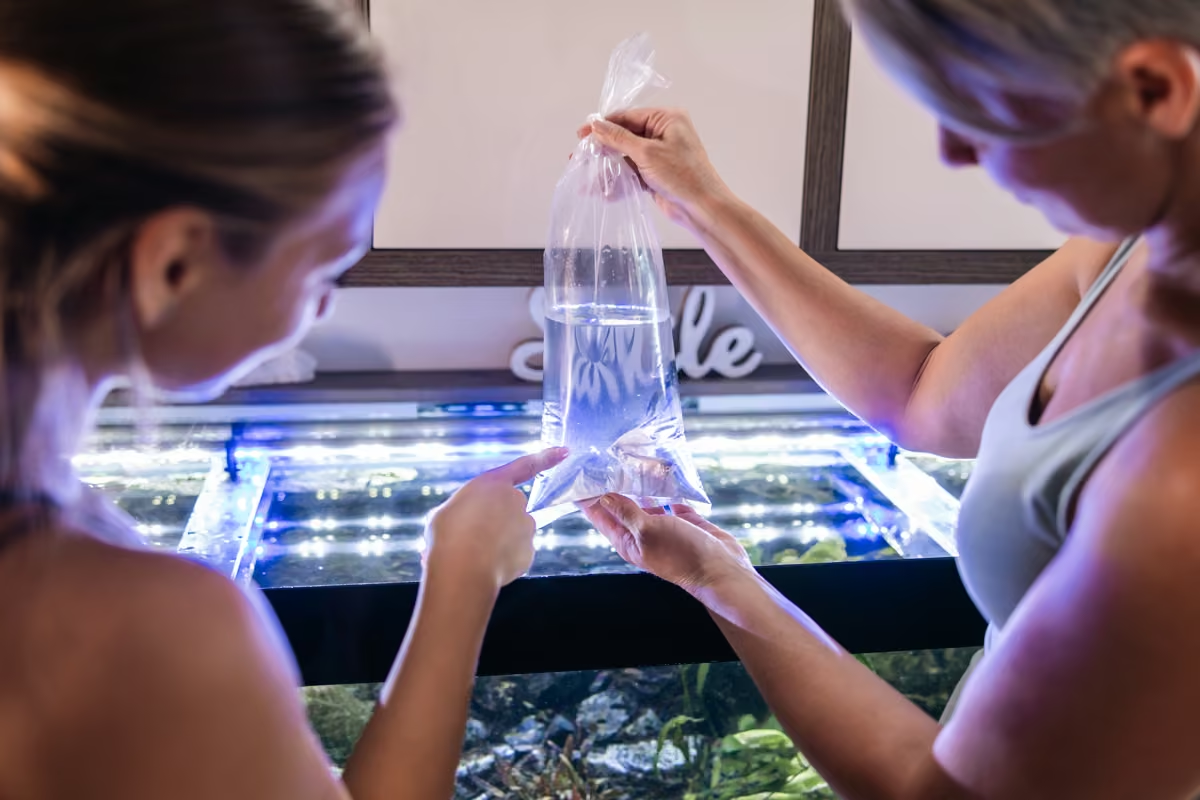
If you already have fish in an uncycled tank, the goal changes completely: it’s now about keeping the fish as safe as possible while the biofilter catches up — not about “running a cycle” at their expense. Do not deliberately maintain high ammonia while fish are present. Instead:
- Test ammonia and nitrite frequently — daily is not too often early on — ideally with a reliable liquid test kit.
- Keep both as low as practically possible. Whenever ammonia or nitrite rises, do a partial water change to dilute it.
- Use properly conditioned, temperature-matched replacement water for those changes.
- Maintain strong aeration — good oxygenation helps the fish cope and supports the nitrifiers.
- Feed conservatively while the biofilter establishes; less food means less ammonia.
- Protect the biofilter: do not replace or sterilise your biological filter media, and never rinse it in untreated, chlorinated tap water.
- Bottled bacteria may help seed and speed the biofilter, but treat it as a helper, not a substitute for testing and water changes.
- Do not add more livestock until the tank is fully cycled — every new fish adds to the load.
Remember that ammonia is more toxic in warm, alkaline water, so a stressed fish in a warm tank needs especially close attention. If readings stay high despite changes, slow down feeding further and increase the frequency of water changes.
How to Speed Up the Nitrogen Cycle
- Seed with established media. A used filter sponge, or some gravel or media from a healthy, disease-free tank, instantly adds live nitrifiers — by far the biggest time-saver.
- Add bottled nitrifying bacteria. Quality starter cultures can jump-start the biofilter, though results vary by brand and storage, and they don’t replace testing to confirm the cycle is actually working.
- Keep the water warm and well-oxygenated, and avoid very low pH, so the colony grows as fast as it can.
How Do You Know When Your Tank Is Cycled?
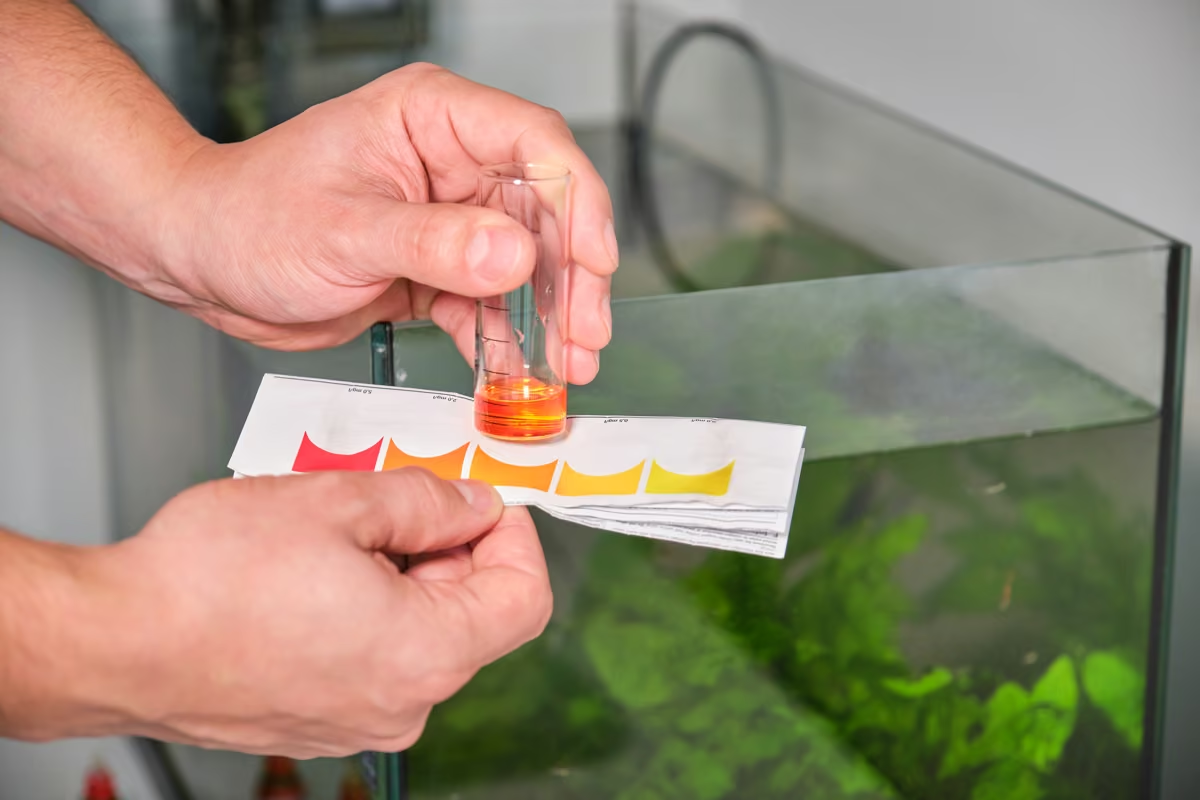
For a fishless cycle, there’s a clear, practical benchmark: dose the tank to about 2 ppm ammonia in the evening, then test the next day. If both ammonia and nitrite read zero after 24 hours the biofilter can process a full dose overnight — the cycle is established. Rising nitrate is useful supporting evidence, but it can stay low in heavily planted tanks or right after a water change, so do not treat measurable nitrate as mandatory proof. Repeat the test over a couple of days to confirm the result holds before you rely on it.
Two caveats. First, this is a practical fishless-cycling benchmark, not a strict biological definition of a “cycled” aquarium — it’s a useful, repeatable test, not a law of nature. Second, never dose 2 ppm ammonia into a tank that already contains fish — that would be poisoning them. For a fish-in situation, “cycled” simply means ammonia and nitrite consistently read zero from the fish’s own waste (nitrate usually accumulates over time, but can stay low in heavily planted tanks).
What Is New Tank Syndrome?
“New Tank Syndrome” is what happens when fish are added to a tank whose biofilter isn’t mature. It is fundamentally a biofilter-maturity and water-quality problem — not a contagious disease. With too few microbes to process the waste, ammonia spikes within days and nitrite a week or two later; fish become lethargic, gasp, lose colour, and often die.
It’s closely tied to a handful of avoidable triggers: adding fish before the tank is cycled, overstocking, adding livestock too quickly, and anything that disrupts the filter. If you’re already in it, treat it like the fish-in situation above — test, do partial water changes, feed lightly, and stop adding fish. (Blackening or dark patches during an ammonia problem are covered in why did my fish turn black and die?.)
What Causes an Established Cycle to Crash?
A “cycle crash” is when your established colony of nitrifiers dies back and ammonia or nitrite suddenly reappears. Because those microbes live on your filter media and other surfaces — not in the water column — the crash almost always traces back to something that harmed the media or its environment:
- Replacing all of the biological media at once.
- Letting filter media dry out, or a prolonged power or filter failure that starves the bacteria of oxygen and flow.
- Cleaning media too aggressively, or rinsing it in chlorinated tap water.
- Exposure to chlorine or chloramine.
- Some medications and chemical treatments, which can disturb the colony.
- A sudden, large increase in bioload (a batch of new fish, or overfeeding) that outpaces the colony.
The fix is the same as cycling a tank with fish in it: test, do partial water changes to protect the fish, and give the colony time to recover.
What to Do After Your Tank Is Cycled
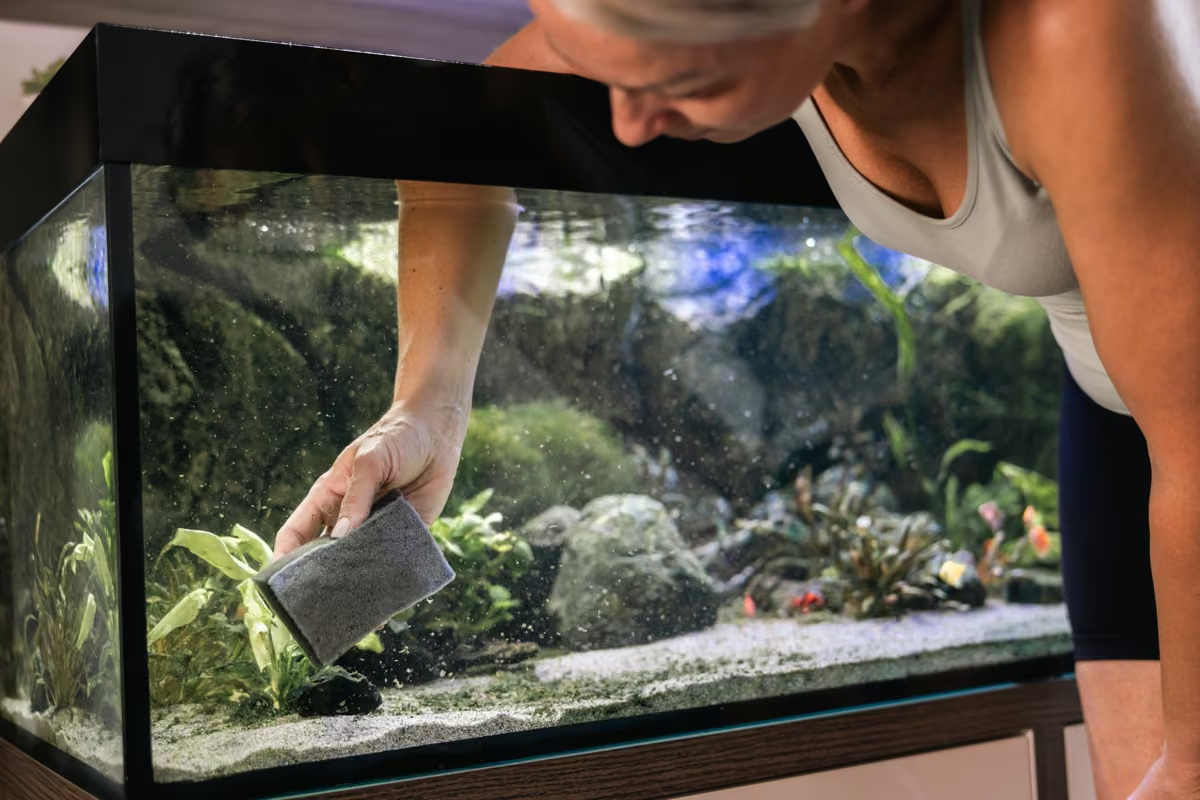
Once cycled, your filter keeps ammonia and nitrite at zero on its own, and your job shifts to controlling nitrate with regular partial water changes and not overstocking. Add fish gradually rather than all at once, and choose a sensible number for your tank size — our guide on how many guppies fit in a 10-gallon tank shows how stocking maths works in practice. When you buy new fish, remember the transport water is its own hazard — see how long can fish survive in a bag?
Frequently Asked Questions
How long does the aquarium nitrogen cycle take?
A new aquarium biofilter often takes several weeks to mature. Around six weeks is common, and some tanks may take up to eight weeks, although established filter media or a successful bacterial inoculation can shorten the process. Use ammonia and nitrite testing—not the calendar—to determine when the tank is actually cycled.
How do I know when my fish tank is fully cycled?
In a fishless cycle, when a ~2 ppm ammonia dose drops to zero ammonia and zero nitrite within your test window (about 24 hours), and the tank can repeat that result. Measurable nitrate is useful supporting evidence but is not required. With fish present, when ammonia and nitrite consistently read zero from the fish’s own waste.
Can I cycle a tank with fish already in it?
Yes, but it’s a harm-reduction approach, not the ideal. Test frequently, keep ammonia and nitrite as low as possible with partial water changes, feed lightly, protect the filter, and don’t add more fish until it’s done.
Do water changes stop the nitrogen cycle?
No. The nitrifiers live on your filter media and surfaces, not in the water, so changing water doesn’t remove them. Water changes simply dilute ammonia and nitrite to protect fish while the biofilter matures.
Can I cycle a tank without adding ammonia?
You need some ammonia source to grow the bacteria. Options include bottled ammonia, a small amount of decaying fish food, or the waste of fish already in the tank (fish-in cycling).
Do bottled bacteria instantly cycle a tank?
Not reliably. Quality products can jump-start a cycle, but results vary and they are not a substitute for testing. Always confirm with your test kit before trusting the tank with fish.
Does dechlorinator kill beneficial bacteria?
No — the opposite. You use a dechlorinator to remove the chlorine and chloramine in tap water, which would kill your nitrifying bacteria. Always condition new water first.
Can I add fish as soon as ammonia reaches zero?
Not from one reading. Ammonia and nitrite should both read zero and hold there when the tank processes waste — a single zero ammonia reading isn’t enough. Confirm the full cycle, then add fish a few at a time.
What causes an established tank cycle to crash?
Usually something that harms the filter: replacing all the media at once, media drying out, a long filter/power failure, over-cleaning or chlorine exposure, some medications, or a sudden jump in bioload.
Sources & References
- University of Florida IFAS Extension — Ammonia in Aquatic Systems: how ammonia forms, why it is toxic, and how pH and temperature change its toxicity.
- Merck Veterinary Manual — Management of Aquarium Fish: biological filtration, the nitrogen cycle, and new tank syndrome.
- PetMD — New Tank Syndrome in Fish: how ammonia and nitrite spike in an uncycled tank.
- Texas A&M / SRAC — How to Start a Biofilter (PDF): nitrifying bacteria grow on filter and wet surfaces, establish slowly, and are killed by chlorine.
- Bartelme, McLellan & Newton, Frontiers in Microbiology (2017): freshwater biofilters host a nitrifying community of ammonia-oxidizing archaea and comammox Nitrospira — the community is more complex than a single pair of bacteria.
The Bottom Line
The nitrogen cycle is the invisible engine that keeps an aquarium liveable: a community of nitrifiers, living on your filter media, turns toxic ammonia into nitrite and then into much safer nitrate. Cycle a new tank fishless whenever you can; if fish are already inside, protect them with frequent testing, partial water changes, light feeding, and a stable, undisturbed filter. Get the cycle right first, add fish slowly, and most beginner heartbreak simply never happens.




[…] your filter. Those bacteria are the engine of your tank’s biological filtration — our guide to cycling a new aquarium explains how they turn ammonia into far less harmful nitrate. You use it whenever you add untreated […]
[…] biologically established, so ammonia is processed quickly rather than building up — our guide to cycling a new aquarium covers how to get there. For a heavily shipped fish, keep it […]
[…] new to how ammonia and nitrite build up (and why a brand-new tank is risky), read our guide to the aquarium nitrogen cycle […]